
Iris van Herpen Spring/Summer 2020 Haute Couture Review
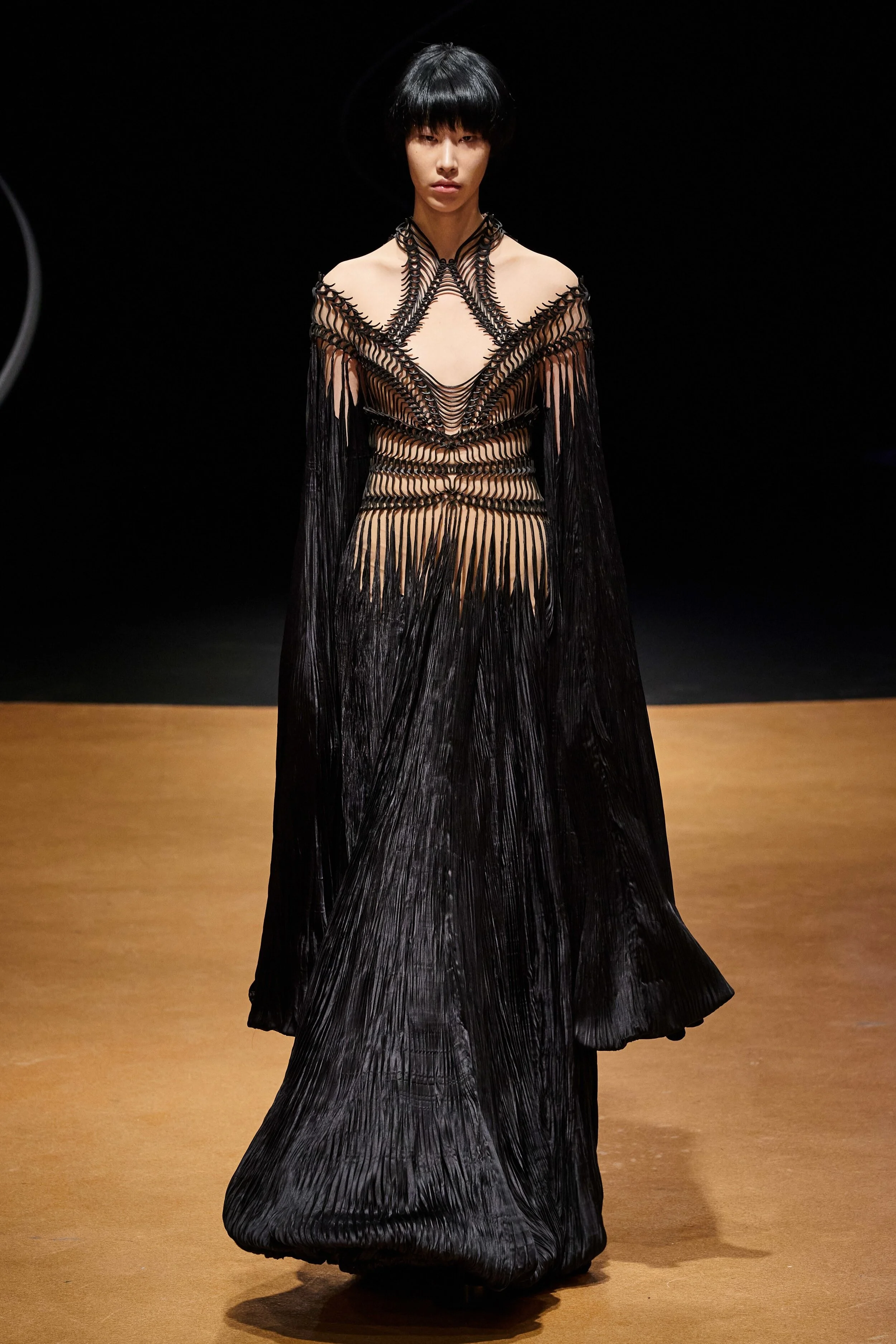
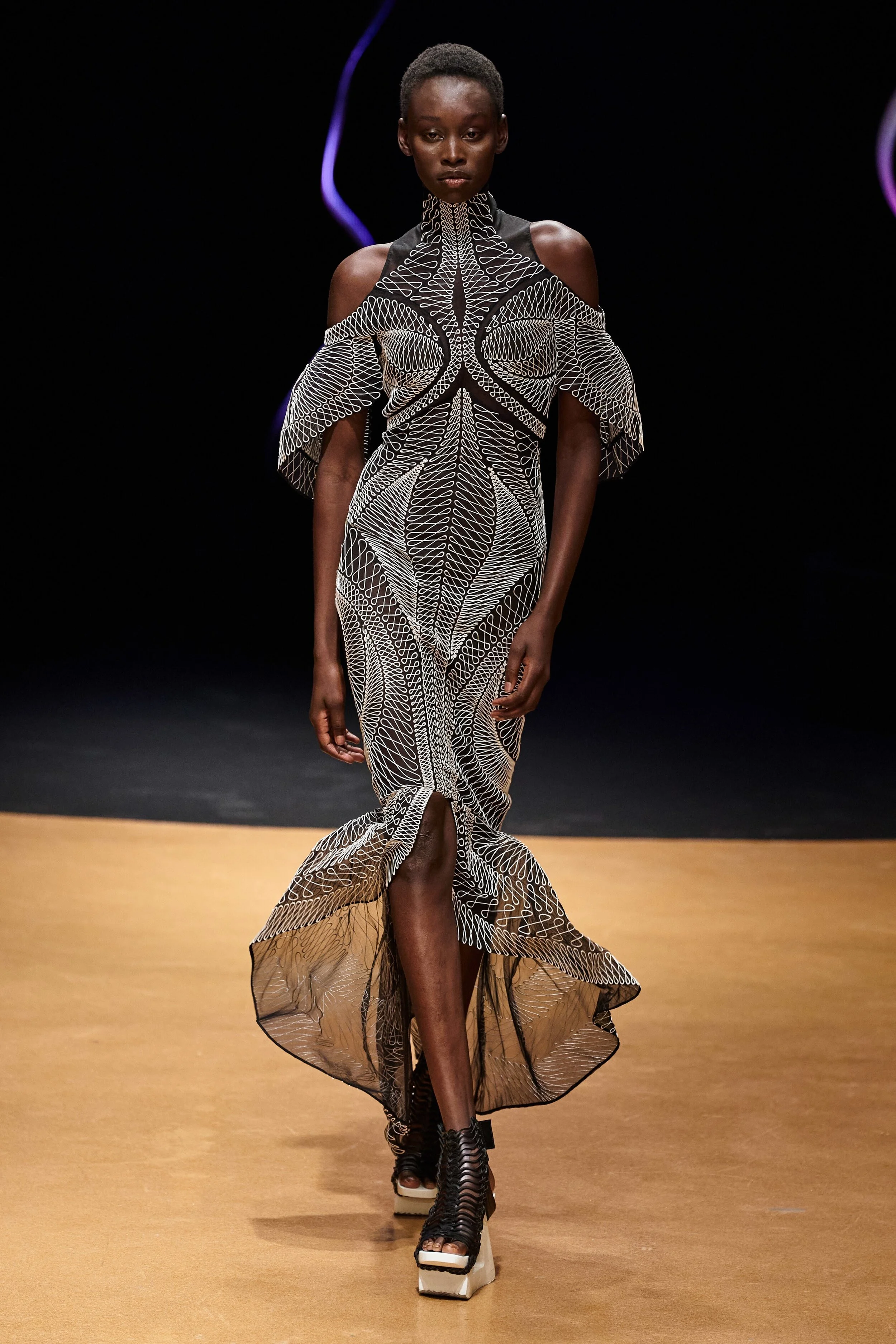
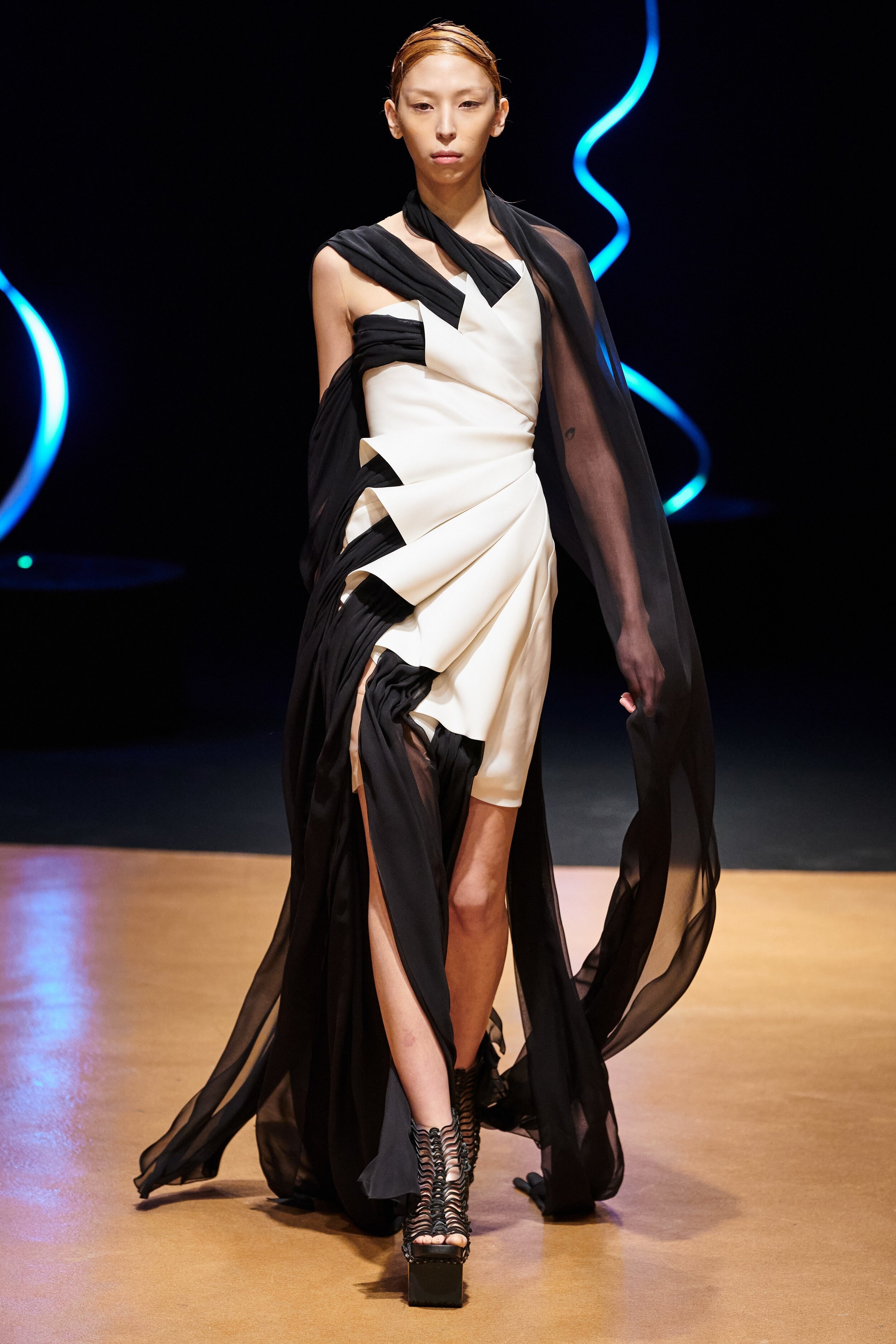
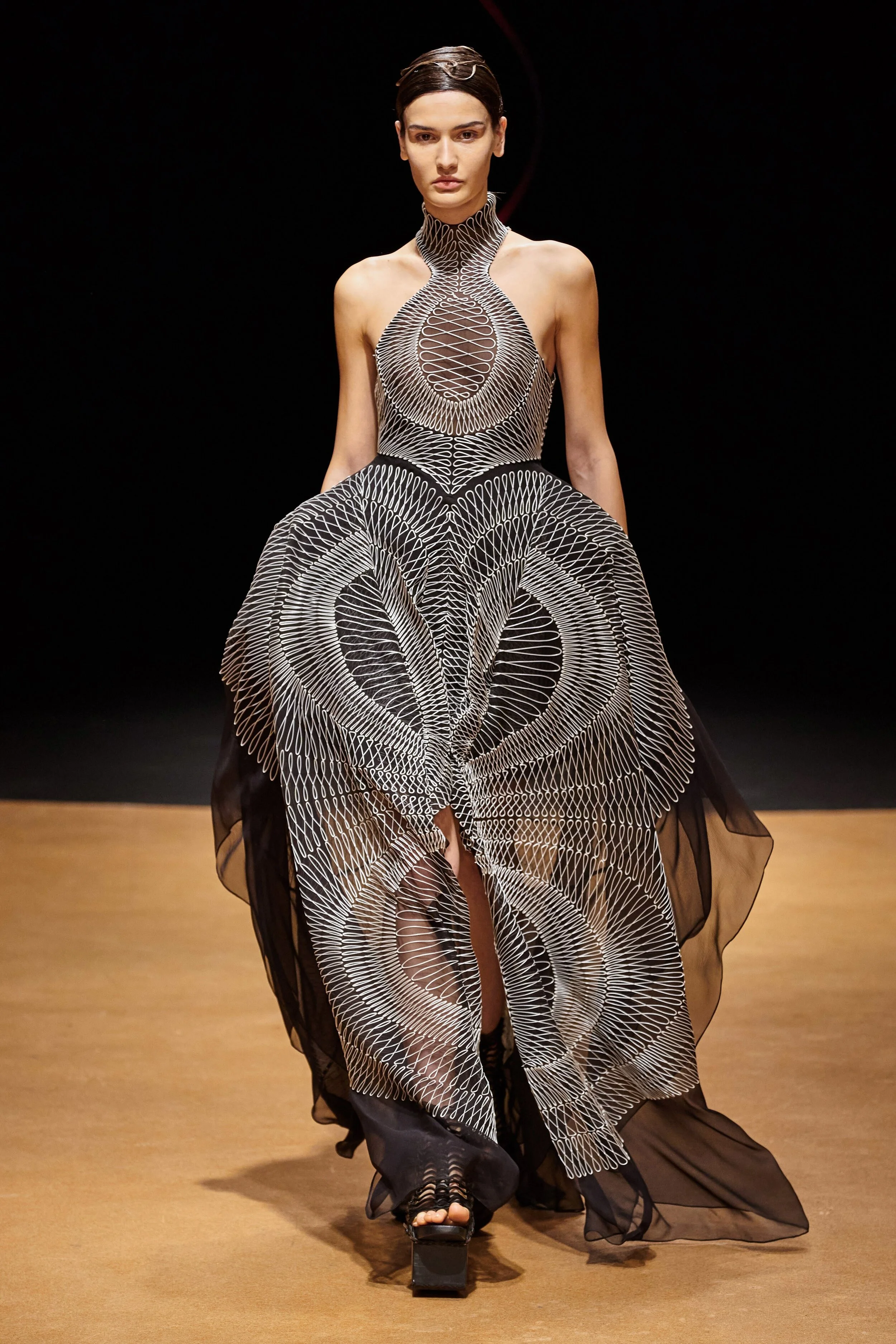
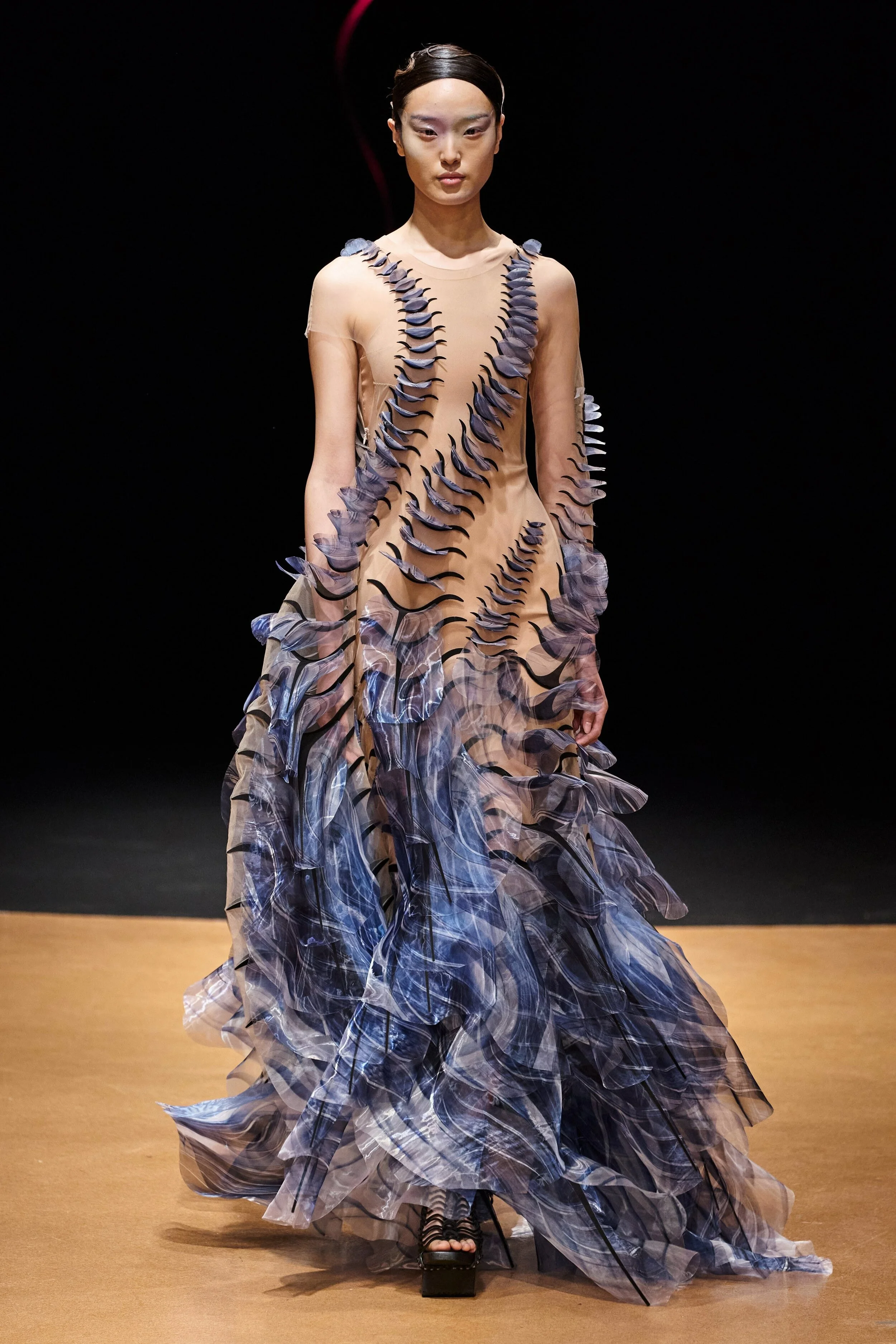
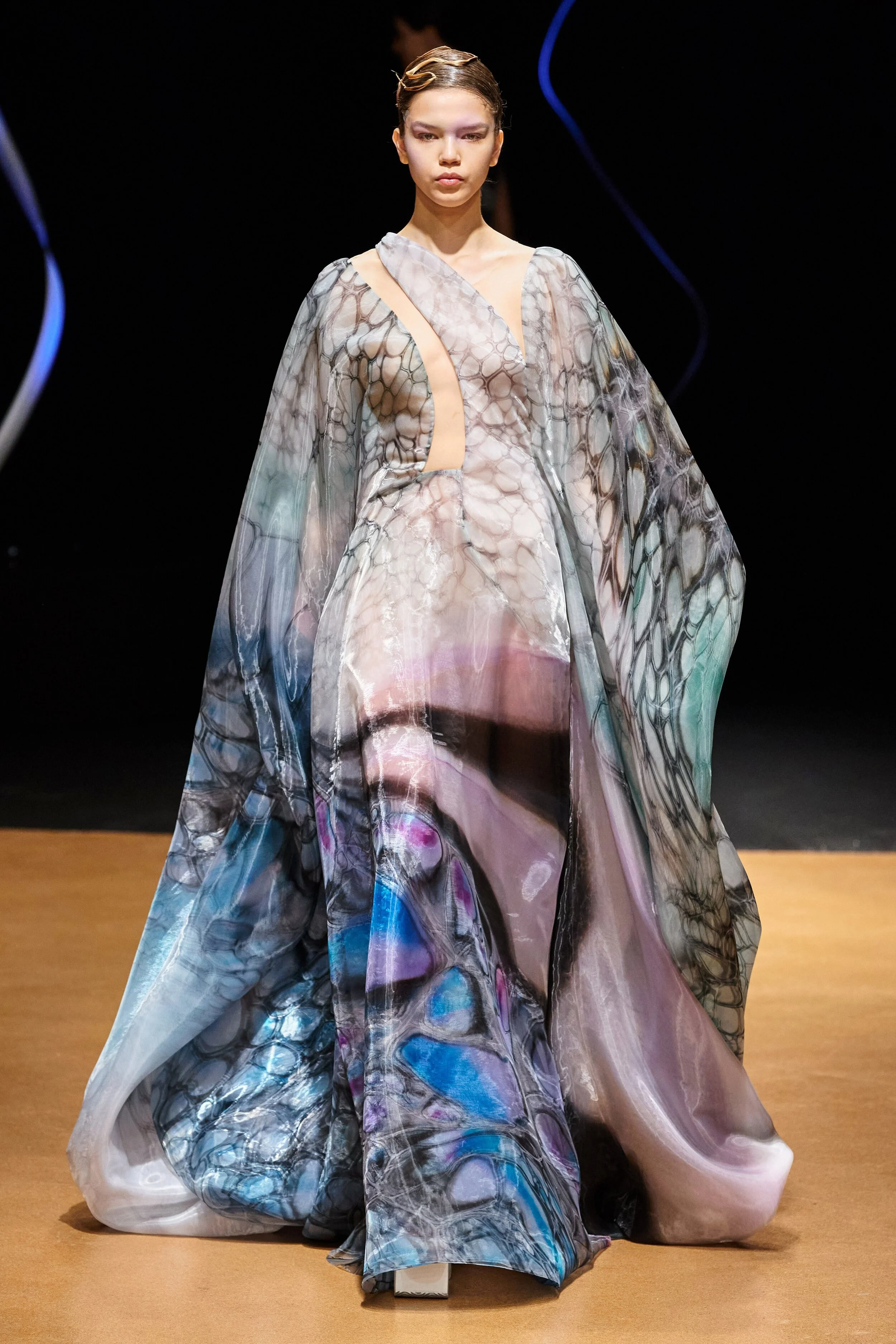
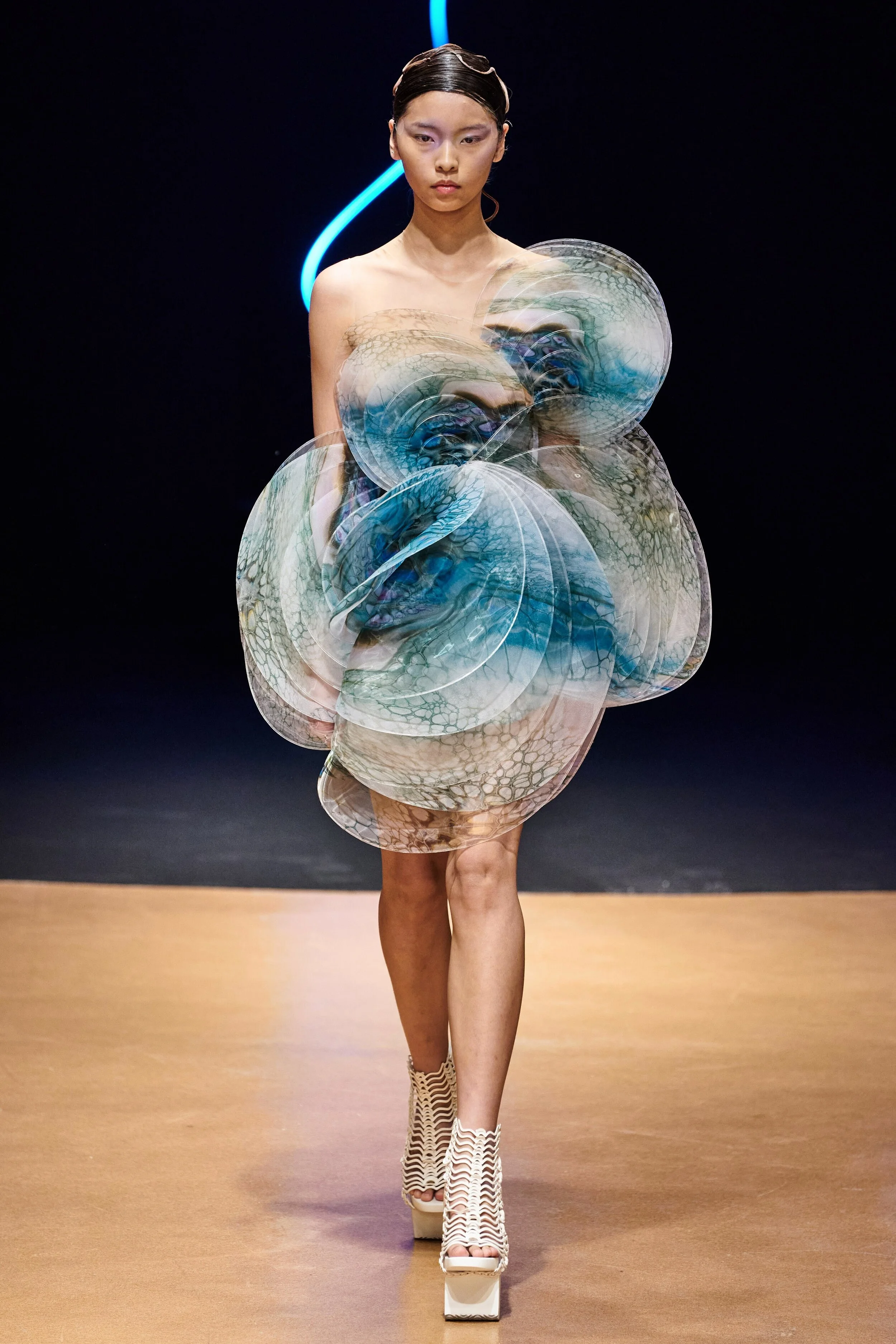
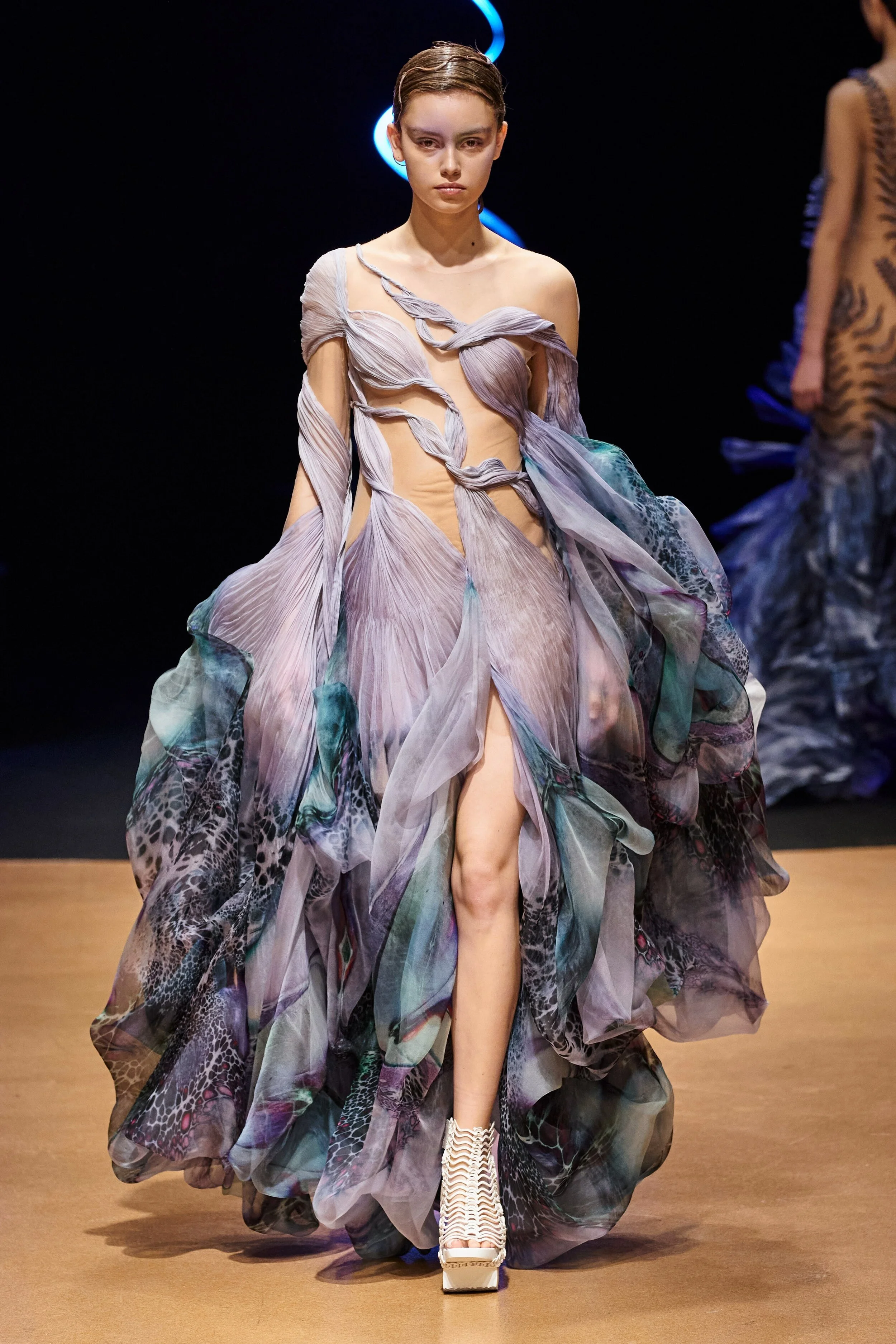
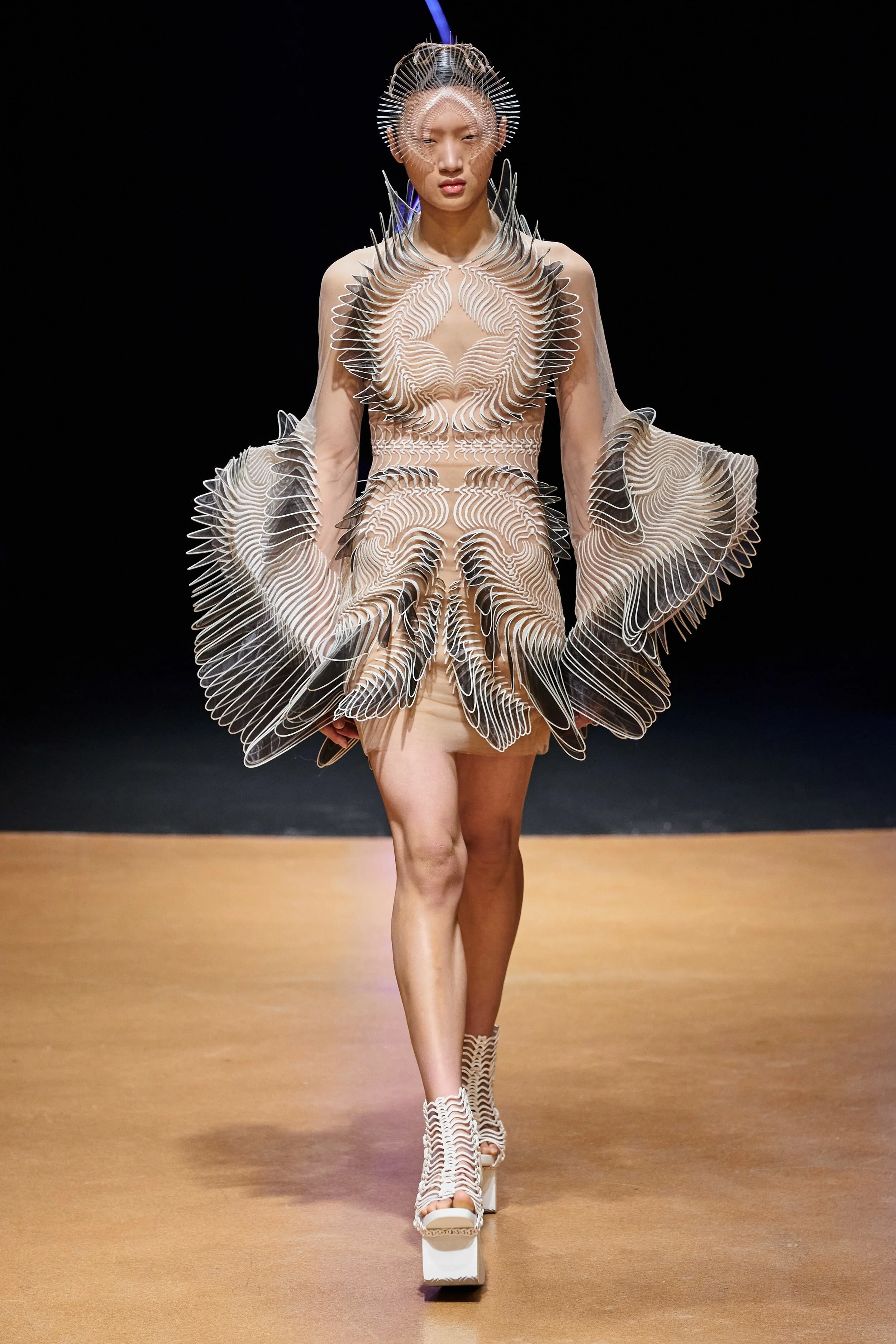
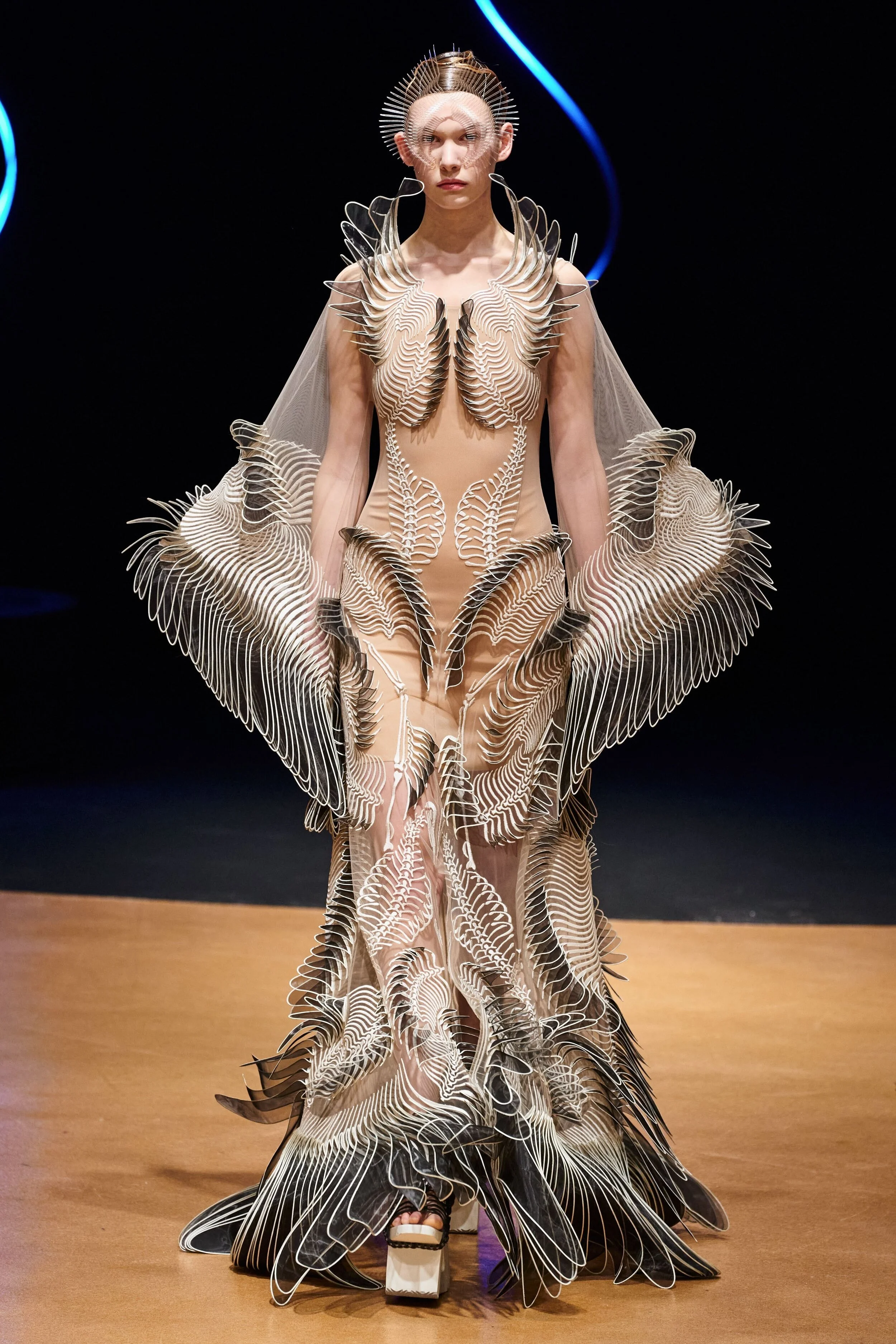
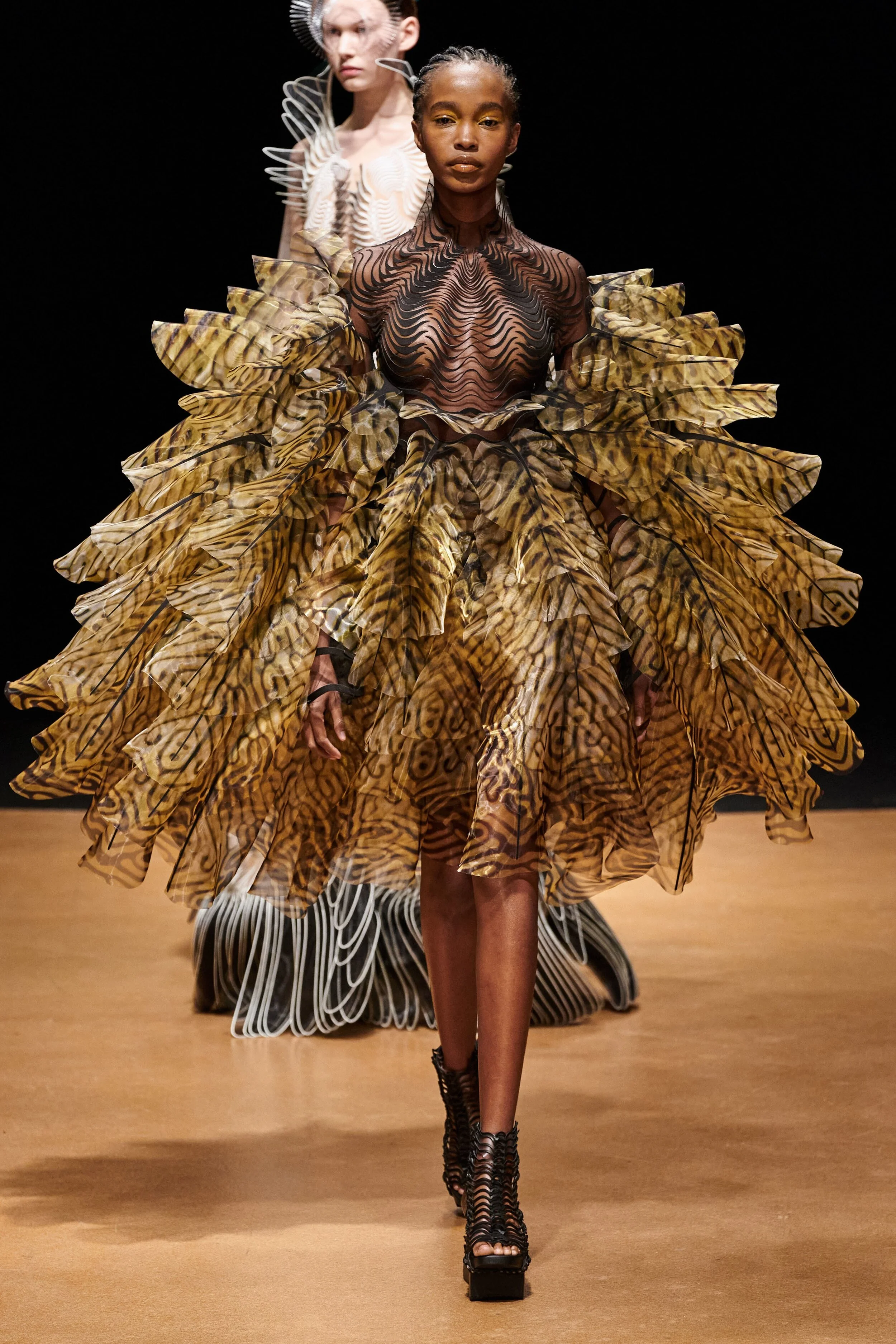
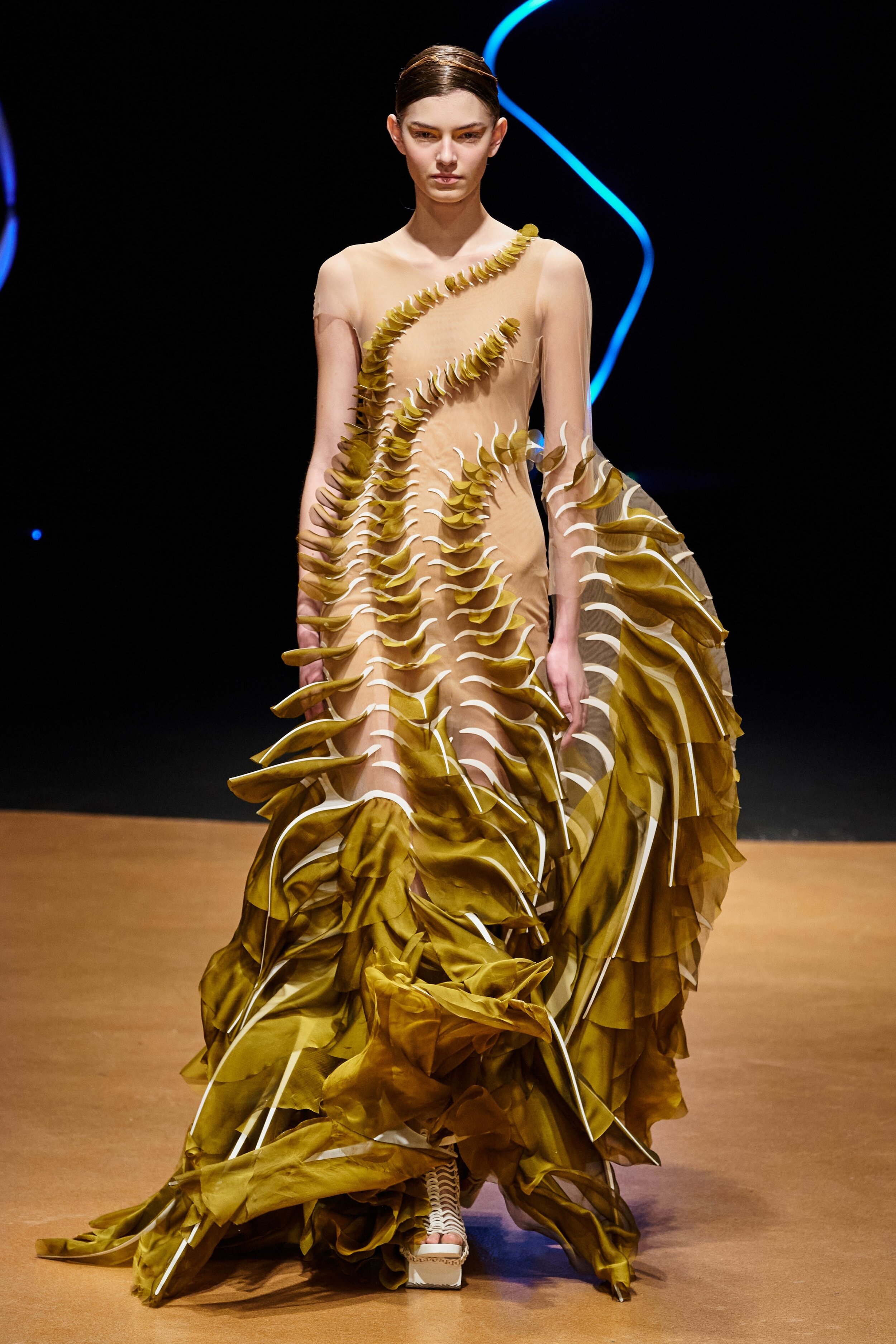
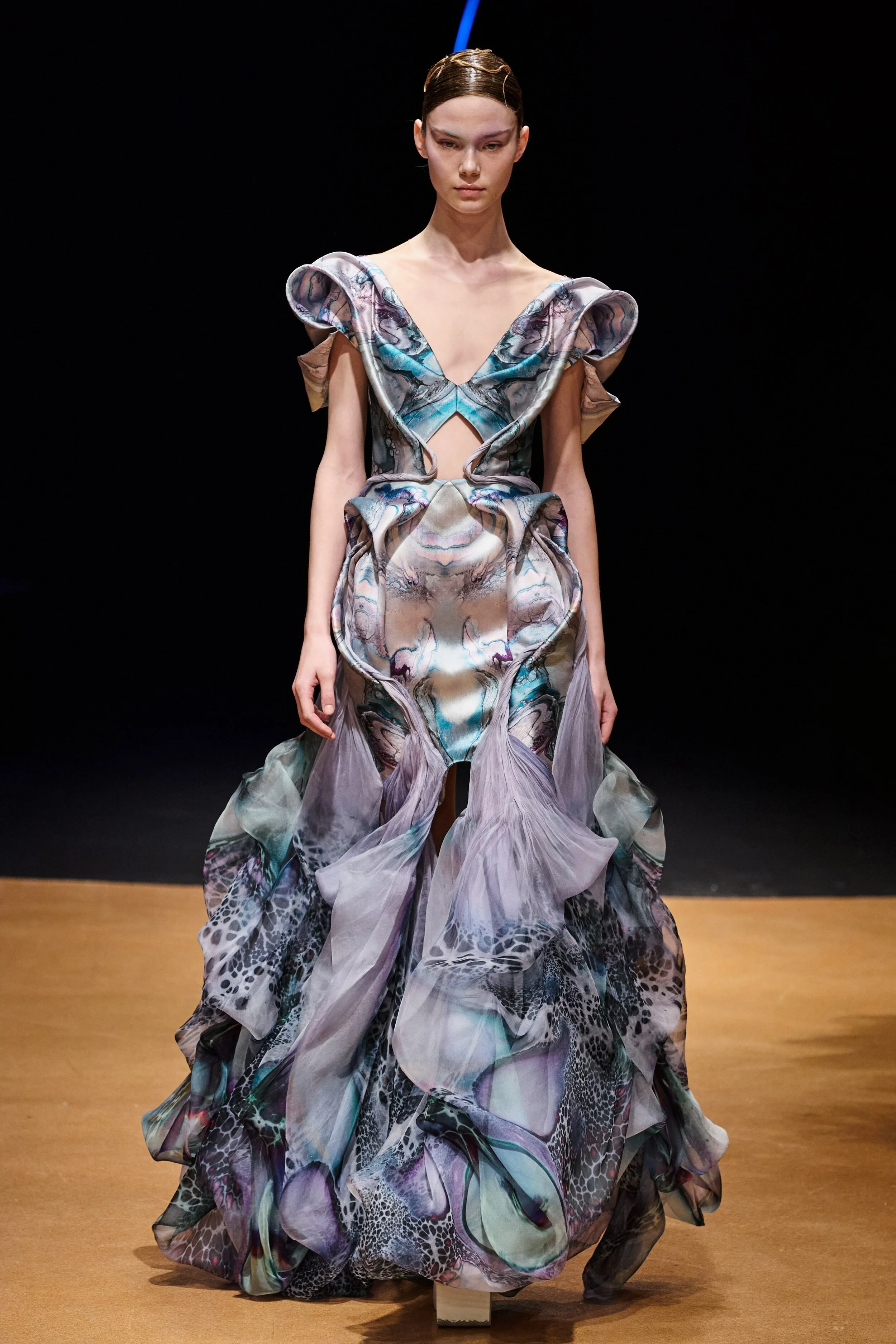
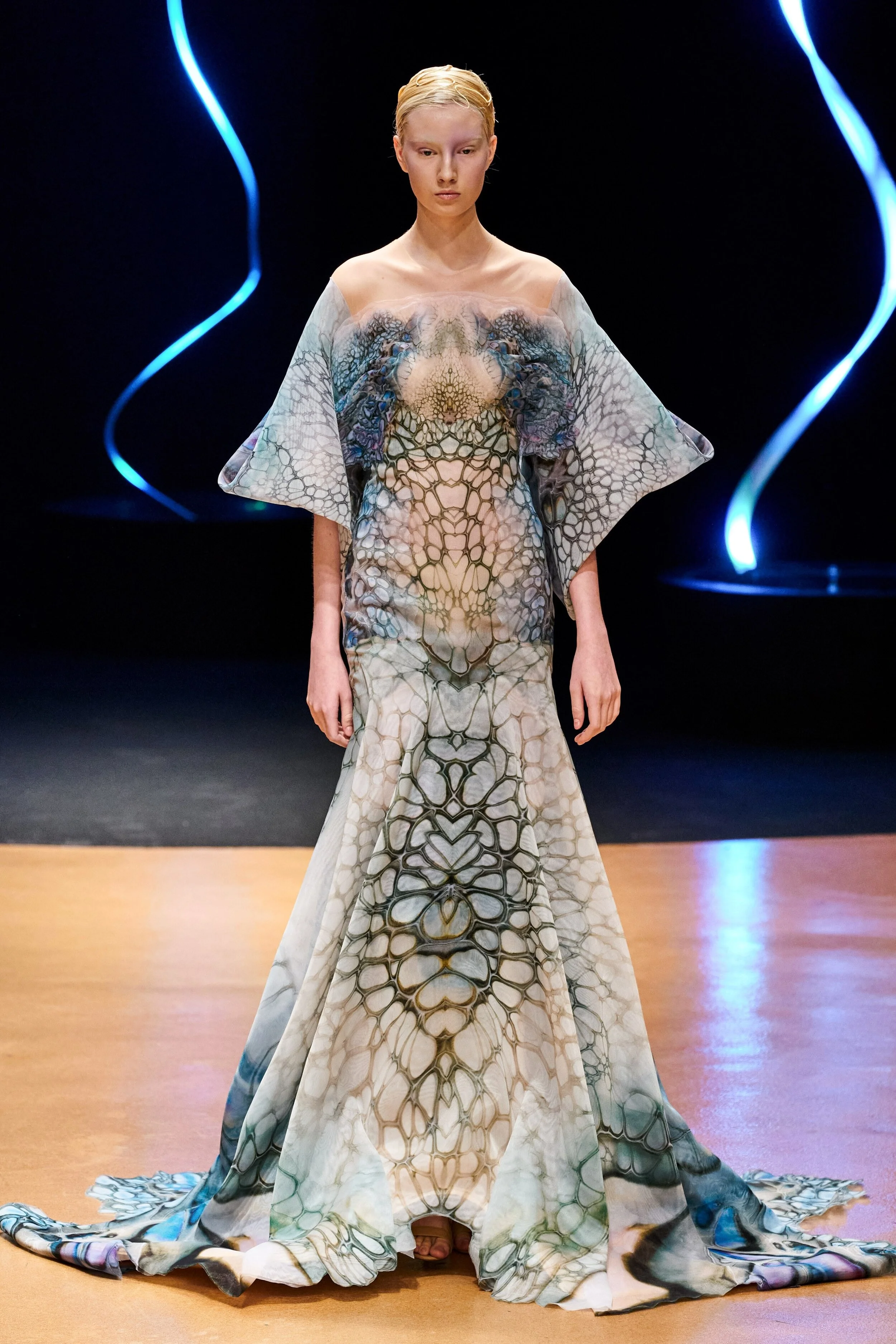
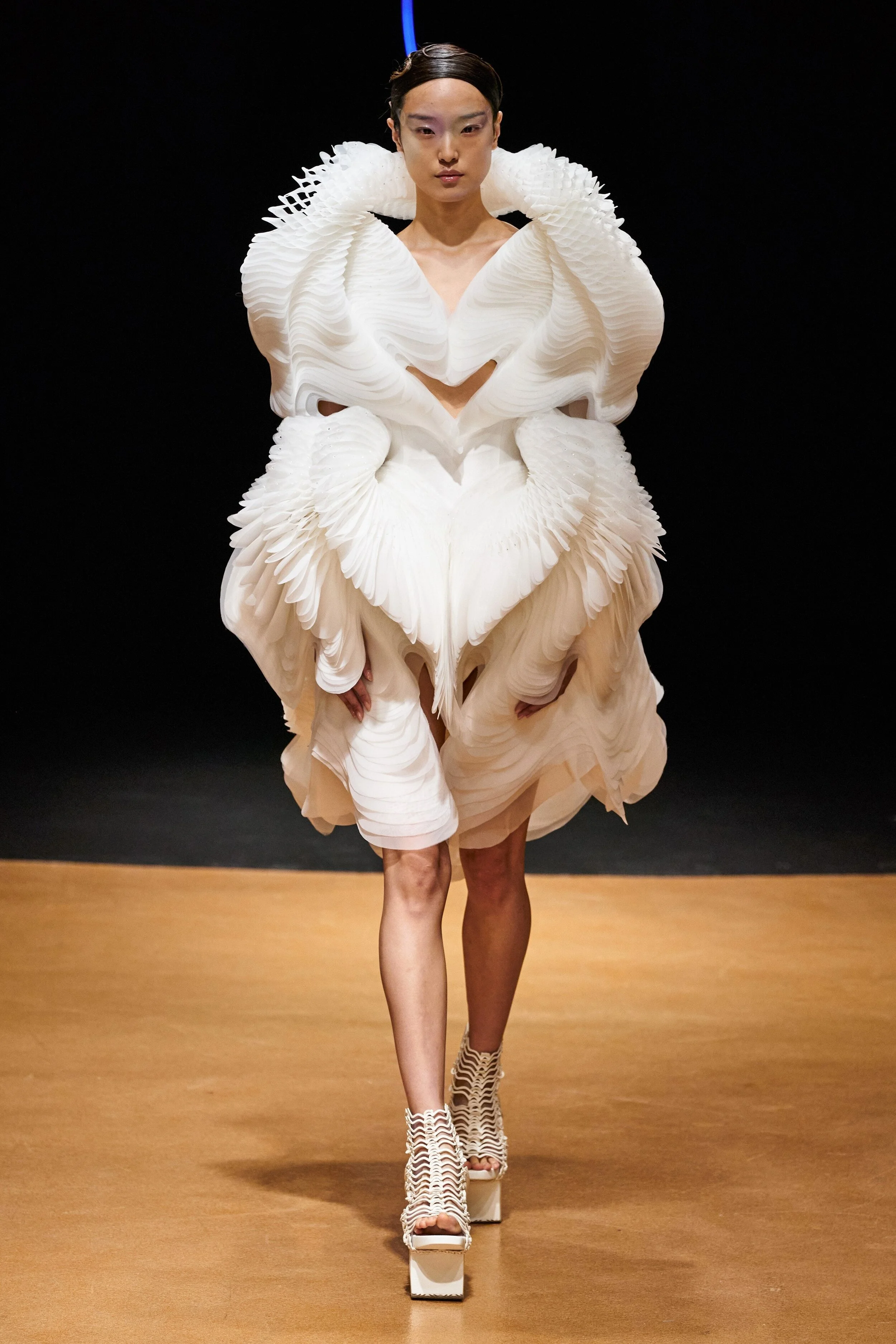
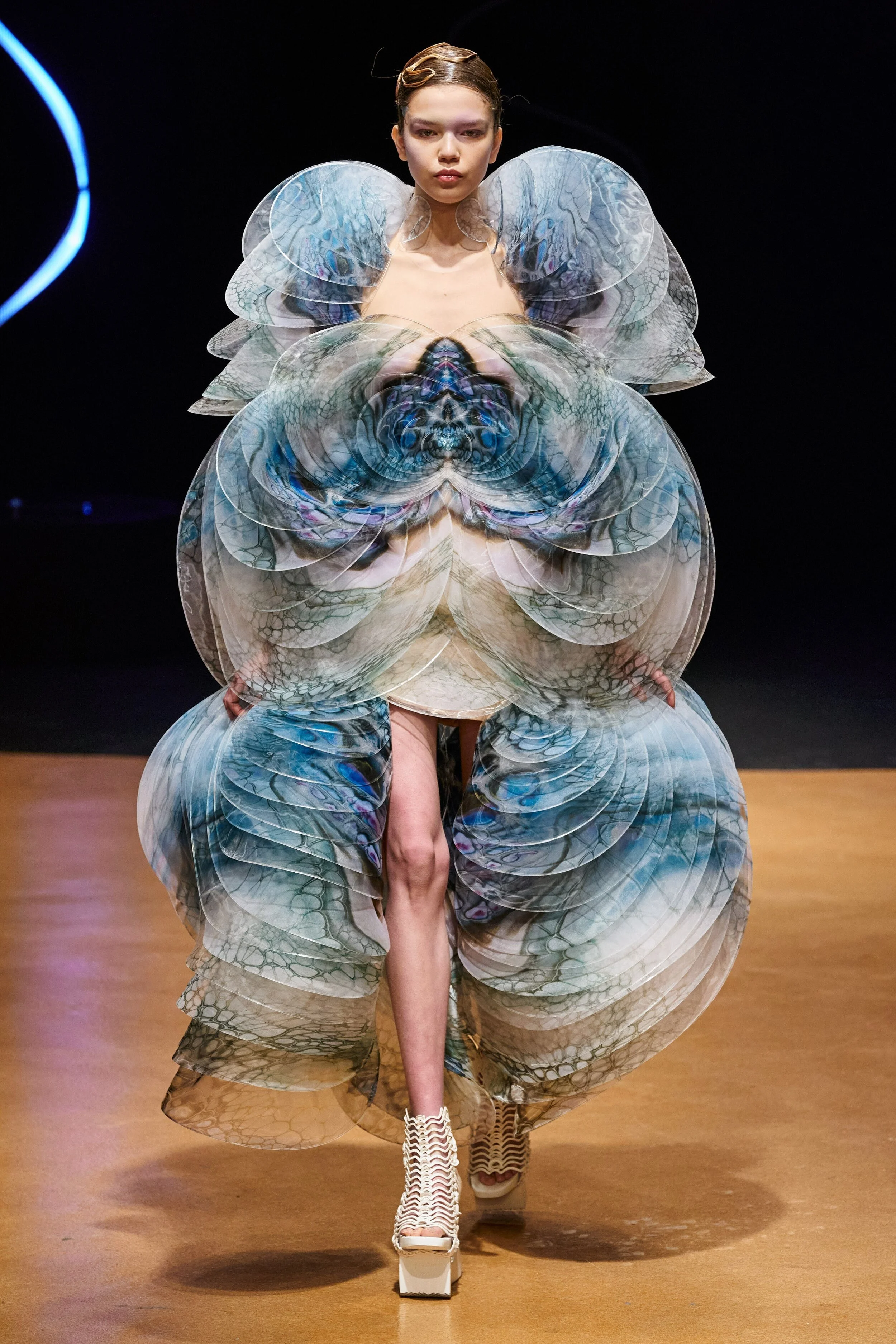
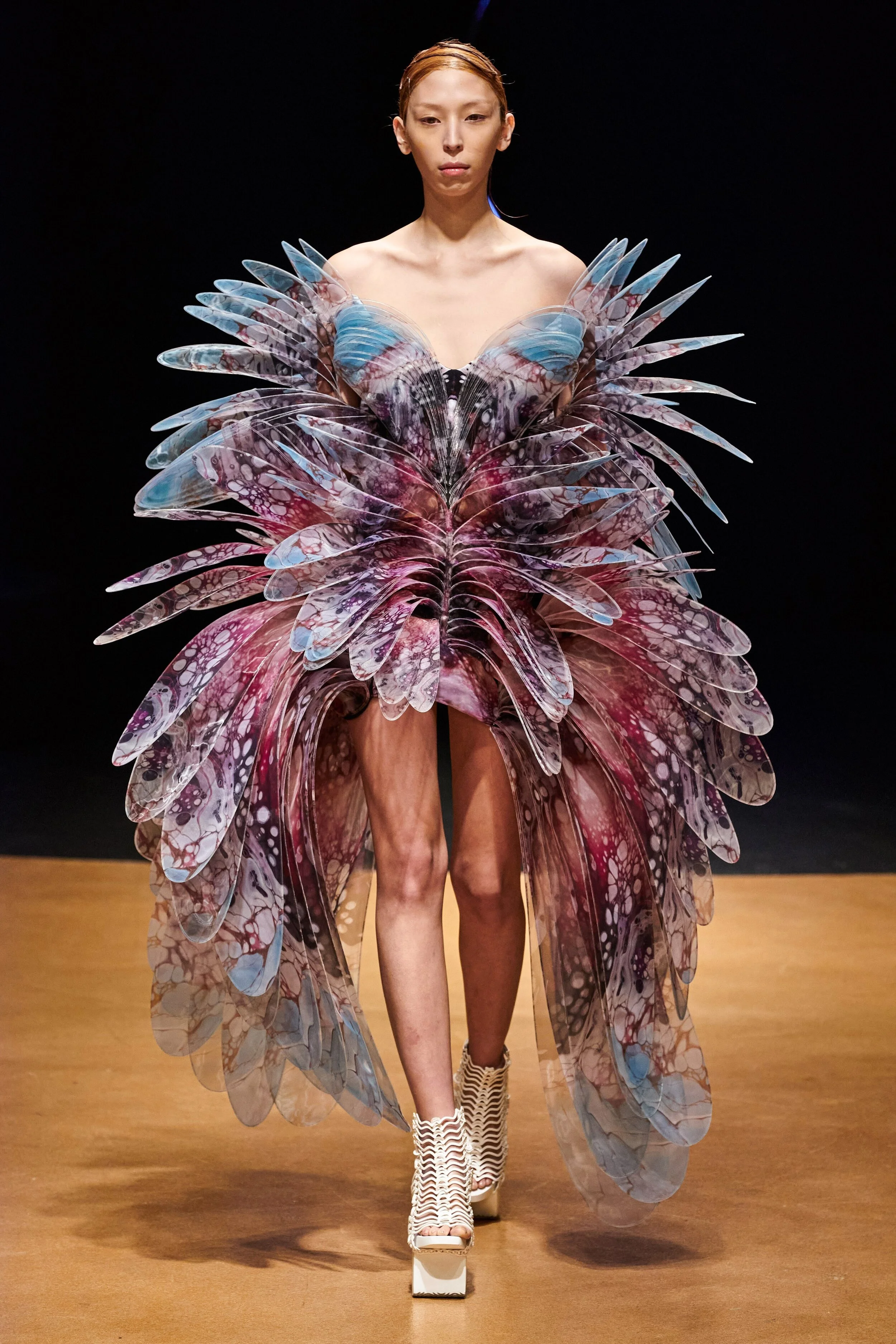
Iris van Herpen’s couture collections are unlike anything else seen in Paris. The designer has always taken inspiration from science. Though plenty of designers find inspiration in plants, insects, and animals and their markings, van Herpen’s palette extends to the microscopic and macroscopic level. She examines the way plant and animal cells are structured and how that affects their functions. A hard, rectangular plant cell has a tough cell wall to protect the soft and delicate interior. The same can be said about the more streamlined gowns in van Herpen’s Spring/Summer 2020 Couture collection entitled “Sensory Seas”.
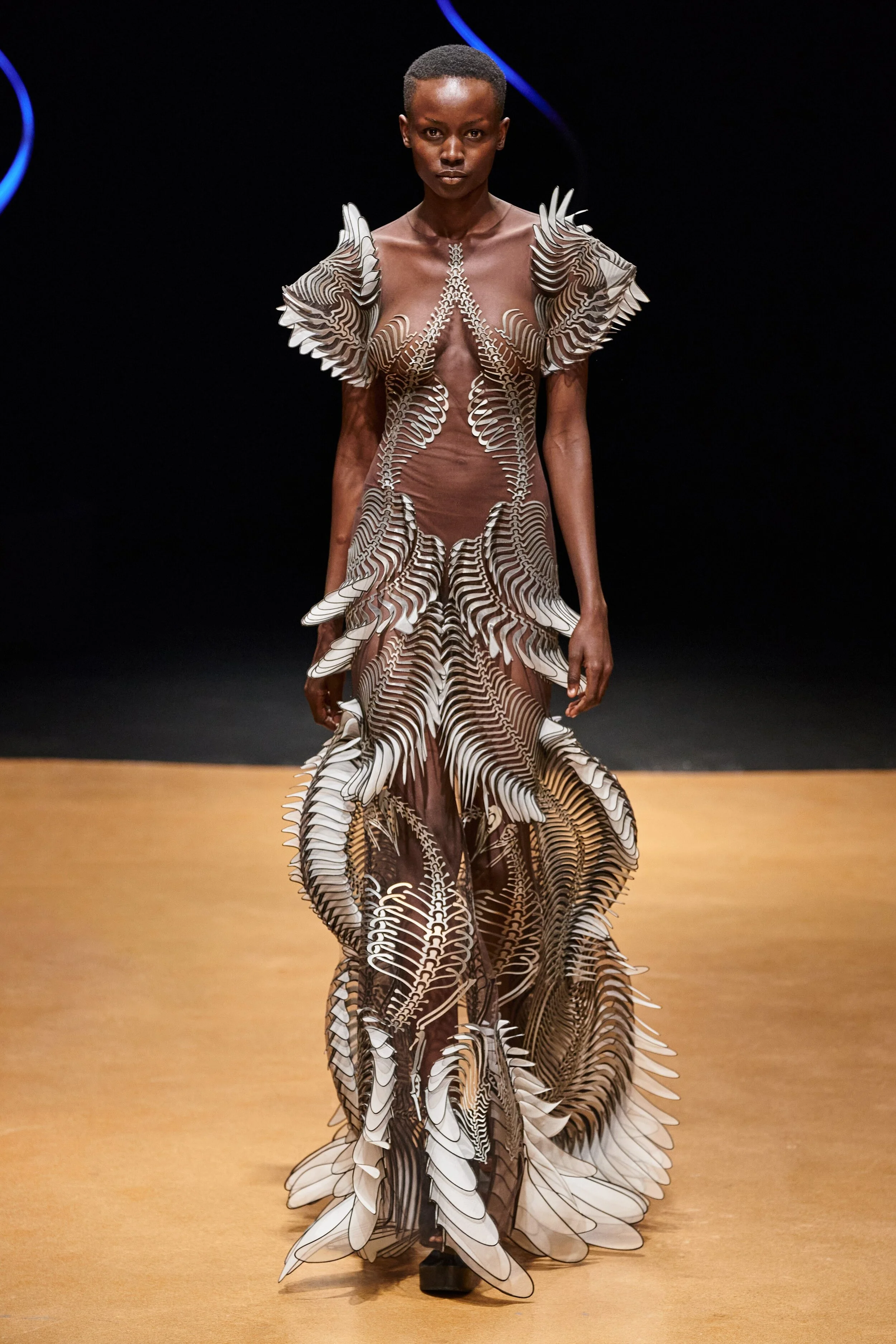
Two dresses in particular, one in white and one later in black had contrasting streams of fabric draping the body and swaying like a sea anemone. The very first look of the collection featured an intricately strapped leather corset hooked with pleated black silk that floated with drama. As the model turned and walk with her sculptural platform heels, she threw her arms up into the air and the dress practically levitated like a mythical stingray. More drama progressed with microscopic white prints shaped the wearer and morphed into 3-D scales that changed the model’s form. Evolution took over and those scales turned into shark fin shapes that created an ethereal balance of symmetrical shapes.
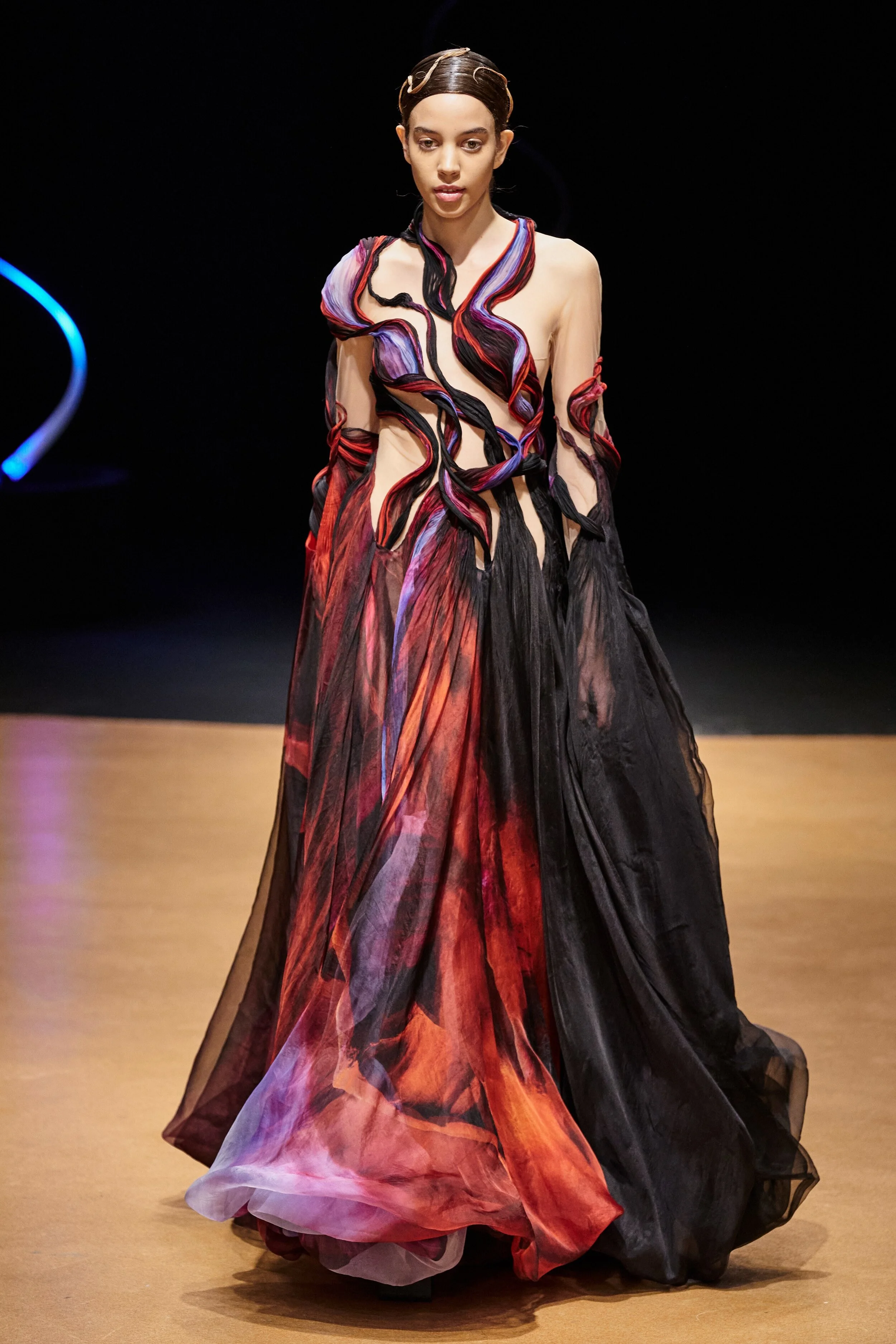
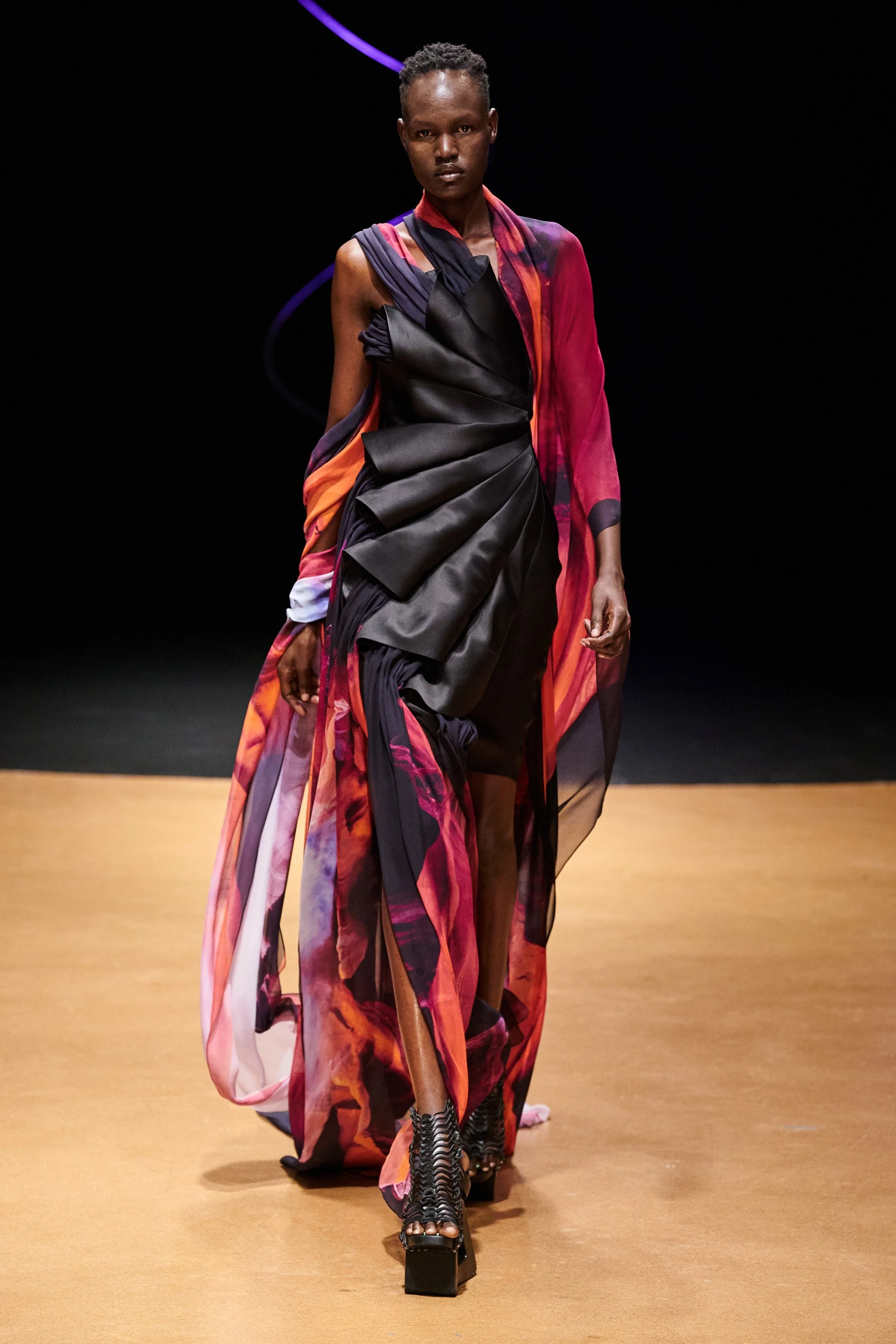
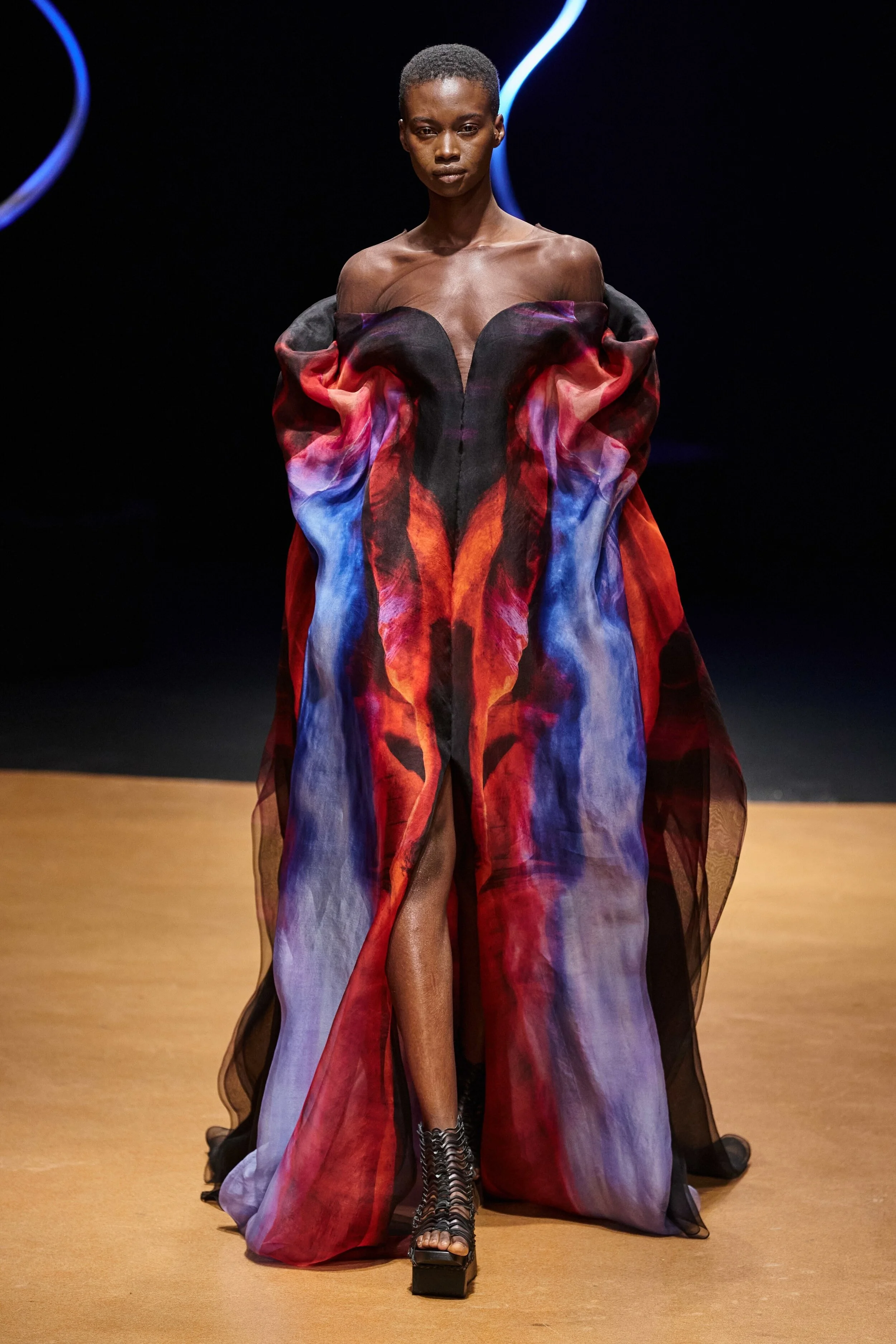
Ice and fire met in painterly prints over black gowns as well. These prints extended into the actual draping of the fabric in cohesive flourishes that Cristóbal Balenciaga would’ve swooned over. However, the fire quickly melted the ice and gave way to a silvery blue and purple ocean. These cool tones appeared over a few kimono silhouettes, with wide sleeves, fitted waist, and flared out skirts. One specific dress (look #17) resembled several of the 3-D printed dresses Alexander McQueen debuted back in Spring/Summer 2010. However, van Herpen took the dress one step further by expanding its drapery and letting the fabric flow to the floor.
Tectonic plates shift, ejecting magma into the ocean. That magma hardens on top of itself until it eventually becomes land. In the midst of all that, soupy, boiling water creates bacteria protozoa: new life. Van Herpen has been creating scientific couture by using unconventional materials for the past ten years. In this past decade the designer has softened and focused on a more detailed and intricate beauty, enhancing the wearer by giving them something new to experience.
Photos Courtesy of VogueRunway.com